How AI is Transforming Healthcare Administration to Boost Revenue

Revenue in healthcare often leaks out long before a claim reaches a payer. A missing prior authorization, a coding mismatch, an unread denial trend, or a slow patient estimate can turn earned care into delayed or lost payment.
That is where AI is changing the administrative side of healthcare. The strongest use cases are not flashy. They are practical, repeatable, and tied to the revenue cycle. AI helps teams catch errors earlier, reduce avoidable denials, improve scheduling, and make billing clearer for patients.
This content is informational only and should not be treated as legal, financial, or clinical advice.

AI improves revenue before the claim is created
Many revenue problems start at the front door. If insurance details are wrong, eligibility is not checked, or a referral requirement is missed, the claim may fail later. AI can read intake forms, compare them with payer rules, flag missing information, and guide staff to fix issues while the patient is still in the workflow.
This is one of the clearest ways AI supports revenue growth. It helps prevent avoidable rework.
Common front-end uses include:
Eligibility checks
AI can compare patient coverage data against appointment type, location, and payer requirements.
Prior authorization support
AI can identify when authorization may be needed and help assemble the required documentation.
Patient cost estimates
AI can help create more consistent estimates by connecting insurance data, procedure codes, and historical payment patterns.
Registration quality review
AI can flag incomplete demographic fields, mismatched policy numbers, or likely duplicates.
Small fixes at this stage can have a large effect. A clean claim starts with clean information.
AI helps reduce claim denials and speed up payment
Denials are expensive because they take time to correct. They also hide patterns. One denial may seem like a simple mistake. Hundreds of similar denials may point to a bad workflow, unclear payer rule, or repeated documentation gap.
AI can review claim history and group denials by root cause. Instead of waiting for monthly reports, teams can see which payers, codes, departments, or visit types are creating payment friction.
The revenue value of AI is often strongest when it prevents the same mistake from happening again.
AI tools can support denial prevention by checking claims before submission. They can flag missing modifiers, coding conflicts, expired authorizations, or documentation issues that often lead to rejection.
This does not remove the need for trained billing and coding teams. It gives them a better filter. The team can spend less time finding basic issues and more time resolving the ones that require judgment.

AI makes scheduling more profitable
Scheduling is often treated as an access issue, but it is also a revenue issue. Empty slots, late cancellations, poor appointment matching, and uneven provider utilization all affect income.
AI can study past appointment patterns and help predict no-shows, cancellation risk, and demand by service line. It can also suggest better waitlist use or more accurate visit lengths.
For example, a clinic may learn that certain appointment types need longer time blocks, while others can be scheduled more tightly. A system may also identify patients who are likely to miss a visit and trigger earlier reminders or alternative scheduling options.
Better scheduling can increase revenue without adding new locations or services. It helps organizations use the capacity they already have.
Key areas include:
Filling canceled appointments faster
Matching patients to the right visit type
Reducing idle provider time
Improving follow-up scheduling
Supporting reminders based on patient behavior patterns
The goal is not to pack schedules until staff burn out. The goal is to reduce wasted capacity and create a smoother flow.
AI improves patient billing and collections
Patient financial responsibility has become a larger part of healthcare revenue. That makes communication more important. Confusing bills, delayed statements, and unclear payment options can slow collections and frustrate patients.
AI can help create clearer billing messages, segment accounts by need, and guide patients to payment plans when appropriate. It can also help teams identify which accounts may need human support instead of another automated reminder.
This matters because collection is not only about asking for payment. It is about making the bill understandable.
AI can support patient billing by:
Translating complex charge details into plain language
Sending reminders at better times
Identifying accounts that may qualify for financial assistance review
Routing billing questions to the right team
Reducing repeated calls about the same issue
A better billing experience can help revenue while also reducing patient stress.

AI gives leaders a clearer view of revenue leakage
Traditional revenue reports often show what already happened. AI can help show what is likely to happen next.
That shift matters. If denials are rising for one payer, if authorization delays are increasing in one specialty, or if collections are slowing for certain balances, teams need to know early.
AI can connect data from scheduling, registration, coding, billing, payer response, and collections. When used well, it can point to the specific process that needs attention.
A useful AI revenue dashboard should answer practical questions:
Revenue question | Why it matters |
Which claims are most likely to be denied? | Teams can fix high-risk claims before submission. |
Which payers are slowing payment? | Leaders can focus follow-up where delays are growing. |
Which appointment types have the highest no-show risk? | Schedules can be adjusted before revenue is lost. |
Which balances need human support? | Staff can focus on accounts where help may change the outcome. |
The best systems do not just show more data. They help people choose the next best action.
AI works best when people stay in control
AI should not run healthcare administration on autopilot. Revenue cycle work includes judgment, compliance, payer contracts, patient needs, and ethical concerns. Human review is still essential.
The strongest approach is to use AI as a second set of eyes. It can scan large volumes of data, flag risk, and suggest next steps. Staff still confirm, correct, and decide.
Healthcare organizations also need clear rules for data privacy, bias review, audit trails, and access control. AI tools must fit HIPAA expectations and internal compliance standards. Any system handling patient or payment data should be reviewed carefully before use.
The real revenue opportunity is fewer leaks
AI is not valuable in healthcare administration because it sounds advanced. It is valuable when it helps recover revenue that organizations already earned.
That can mean fewer denied claims, faster prior authorizations, better scheduling, clearer patient billing, and earlier visibility into payment risk. The revenue lift comes from hundreds of small improvements that add up across the full administrative process.
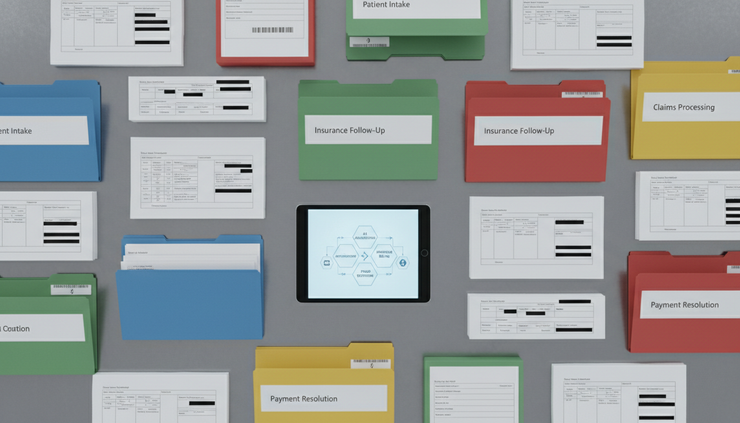
The future of healthcare revenue is not only more automation. It is better timing, cleaner data, and smarter support for the people who keep care operations moving. AI helps most when it turns hidden revenue leaks into visible, fixable work.

Comments